
On the Weekly Torah Portion of Ki Tisa
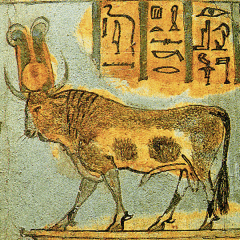 The Torah portion of this week, ki tisa, (Exodus 30:11 – 34:35) continues with the theme of the construction of the Tabernacle. But it also contains one of the most potent stories of the book of Exodus: the story of the golden calf.
In a nutshell: after the people of Israel received, collectively, a revelation of God’s voice, including the Ten Commandments, they signed on the dotted line by famously declaring na’aseh ve-nishma’ (נעשה ונשמע) “We will do and listen” (Exodus 24:7). The midrash takes these words to signify their complete trust, since the word na’aseh, “we will do”, preceded the word nishma’, “we will listen”: they committed themselves to obey the Torah even before they heard it fully. (more…)
On The Weekly Torah Portion of Va-yechi
 This week’s Torah portion, va-yechi (Genesis 47:28 – 50:26), is the concluding parashah of the book of Genesis, and the bulk of it deals with the passing of Jacob and his blessings to his sons and two of his grandsons. Jacob leaves his sons specific instructions with regard to where his body should be buried: in the Machpelah cave, the burial ground purchased by Abraham where Abraham, Sarah, Isaac, Rebecca, and Leah are all buried. Joseph takes a temporary leave from Pharaoh and travels to Hebron with all his brothers to bury their father according to his last wishes.
The Midrash, the allegorical level of interpretation of the Torah, adds some revealing details about Joseph’s action in his short visit to the land of his birth. According to Midrash Tanhuma, at the conclusion of the burial ceremonies, Joseph goes to Shekhem to visit the pit into which he was thrown by his brothers before they sold him as a slave to the Ishmaelite merchants.
On the Weekly Torah Portion of Vayigash
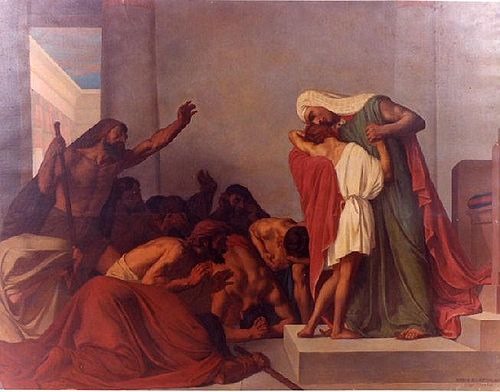 This week’s Torah portion, vayigash (Genesis 44:18 – 47:27) is the third parashah devoted to the story of Joseph, Jacob’s favorite son. At this stage of the story, Joseph serves as Pharaoh’s viceroy and is the de-facto ruler of Egypt.
In last week’s Torah portion, Joseph’s brothers, who had previously sold him to slavery and were not yet aware of his rise to power, came to Egypt to collect grain to save themselves from the great famine that took over the region. They were sent to Egypt by their father, Jacob, who kept the youngest of his sons, Benjamin, with him at Canaan. Still traumatized by the loss of Joseph, whom he thought for dead, Jacob did not want to risk the life of Benjamin.
On the Weekly Torah Portion of Vayeshev

The parashah (weekly Torah portion) of vayeshev (Genesis 37:1 to 40:23) starts the dramatic story of Joseph, Jacob’s beloved son, whose betrayal by his brothers initiates a chain of events that ended with his becoming Pharaoh’s viceroy and saving his family from hunger.
The Torah tells us that Israel (i.e., Jacob—see the commentary on last week’s parashah) “loved Joseph more than any other of his children because he was the son… [born to him in] his old age” (Genesis 37:3). Jacob also gave Joseph a fancy robe which symbolized the degree to which he favored him. Naturally, this made his brothers jealous. To make things worse, Joseph was in the habit of sharing with them his dreams, in which he appeared to be superior to them and was ruling over them.