
On the Weekly Torah Portion of Acharey Mot
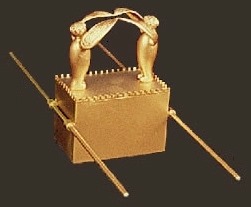
The Ark of the Covenant
As practically all of the book of Leviticus, this week’s Torah portion, acharey mot (Leviticus Ch. 16-18), lists numerous rules regarding how Aharon, the chief priest, is to conduct himself while he is in the Tent of the Meeting (another name for the Tabernacle).
For the Hassidic rabbis, these are just codes for how one should conduct oneself during prayer. The “Tent of the Meeting” is not a physical place for them; it is the deeper realms of one’s consciousness. Entering the Tent of the Meeting (ohel mo’ed) is entering that place within oneself, where one meets one’s Maker.
On the Weekly Torah Portion of Terumah
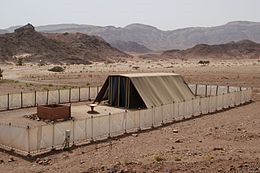 This week’s Torah portion, terumah (Exodus 25:1-27:19), deals with the construction of the tabernacle, the mishkan (משכן), in the desert. The instructions for the construction of the tabernacle are so specific and so minute, that models of the tabernacle can be built with great accuracy (the picture on the left is from such a model built in the south of Israel).
A few verses into the portion, the Torah specifies the effect of building the mishkan:
וְעָשׂוּ לִי מִקְדָּשׁ וְשָׁכַנְתִּי בְּתוֹכָם:And they shall make me a sanctuary, and I will dwell among them. (Exodus 25:8)
The verse seems to suggest, that the tabernacle, the mishkan, will enable God to dwell (lishkon) among the people of Israel. But that is absurd: God confined to a tent? And does that mean that before the construction, God is not able to dwell among them?
On the Weekly Torah Portion of Shemot
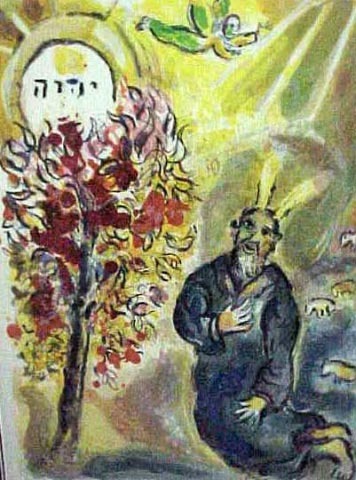 We are in the week of the Torah portion of shemot (Exodus 1:1 – 6:1), the first portion in the book of Exodus, which is the second of the five “books of Moses”, The Pentateuch.
Up to now, in the book of Genesis, the first book of the Pentateuch, the history of the Jewish people is told through the story of one family. And indeed, the first few verses in Exodus remind us that Jacob came to Egypt with his extended family of seventy strong. But the Torah almost immediately fast forwards a few hundred years, by which time the people of Israel have become so many that the new Pharaoh is afraid of them and proceeds to enslave them as a precaution.
On the Weekly Torah Portion of Miketz (Hanukkah Week)
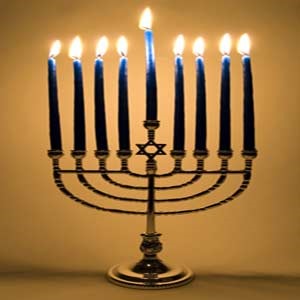 The Shabbat of the weekly Torah portion of miketz (Genesis 41:1 – 44:17) always coincides with Hanukkah, and this year it also coincides with the holiday of Thanksgiving, which is very rare. And yet the two holidays share a common spirit.
Giving thanks is fundamental to Judaism. In fact, it is built into its name. The Hebrew word for “Jew” is “yehudi” (יהודי), which means “belonging to the tribe of Judah, or “yehudah” (יהודה). The name literally means “I thank Yah (God)”. Leah, Jacob’s wife, chose this name for her fourth son in gratitude to God for his birth. Therefore, beyond the myriad of do’s and don’ts and the great tradition of learning, the essence of Jewish life—in fact the essence of Jewish identity—is gratitude towards God. It is what gives us our name and what defines our path and our goal. We are yehudim, a nation of thanks-givers to the Almighty.
On the Weekly Torah Portion of Vayetze
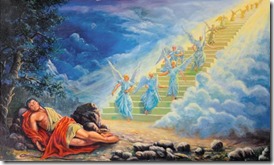 This week’s Torah portion, vayetze, (Genesis 28:10 – 32:3), contains one of the most powerful images in Genesis: the image of Jacob’s famous dream. Much—very much—has been written about the dream itself. But the verses just before and just after the dream contain an important message.
Jacob escapes his parents’ dwelling place in Beer-Sheba in order to avoid the wrath of his brother, whom he had deceived. His journey is long: we are told that he is headed to Haran, a town believed to be in Turkey just off the Syrian border. A long journey, no doubt, yet we only hear about one episode on the way. The text tells us: