
On the Weekly Torah Portion of Miketz (Hanukkah Week)
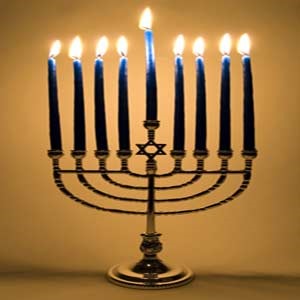 The Shabbat of the weekly Torah portion of miketz (Genesis 41:1 – 44:17) always coincides with Hanukkah, and this year it also coincides with the holiday of Thanksgiving, which is very rare. And yet the two holidays share a common spirit.
Giving thanks is fundamental to Judaism. In fact, it is built into its name. The Hebrew word for “Jew” is “yehudi” (יהודי), which means “belonging to the tribe of Judah, or “yehudah” (יהודה). The name literally means “I thank Yah (God)”. Leah, Jacob’s wife, chose this name for her fourth son in gratitude to God for his birth. Therefore, beyond the myriad of do’s and don’ts and the great tradition of learning, the essence of Jewish life—in fact the essence of Jewish identity—is gratitude towards God. It is what gives us our name and what defines our path and our goal. We are yehudim, a nation of thanks-givers to the Almighty.
We are not special in this regard. Many other religions see gratitude to God—and its resulting humility—as the essence of spiritual/religious practice. Not just our close relatives, the Christians and the Muslims, but also, cultures and traditions more remote from us.
In Buddhism, for example:
The unworthy man is ungrateful, forgetful of benefits [done to him].
This ingratitude, this forgetfulness is congenial to mean people…
But the worthy person is grateful and mindful of benefits done to him.
This gratitude, this mindfulness, is congenial to the best people.
Anguttara Nikaya i.61
And in traditional African religions:
One upon whom We bestow kindness
But will not express gratitude,
Is worse than a robber
Yoruba Proverb
Gratitude is particularly relevant to Hanukkah. Hanukkah is a rabbinical holiday, i.e., one decreed by the rabbis rather than given as an injunction in the Torah, and is therefore considered less important. It commemorates the successful rebellion against the Greeks and the re-dedication of the temple in Jerusalem as a Jewish house of worship. But the Babylonian Talmud mentions that the only reason for celebrating and commemorating the miraculous events of Hanukkah is to cultivate gratitude.
Another point of similarity between Hanukkah and Thanksgiving is that they both commemorate gratitude to the Almighty for supernatural abundance. In the case of Hanukkah, the fact that one-day’s worth of oil for the sacred lamp (menorah) in the temple lasted for eight enabled the light in the temple not to be extinguished until new supplies arrived from the Galilee. Thanksgiving arose out of gratitude for the abundant crops collected by the new settlers during their first year in America.
* * *
The supernatural abundance that is associated with Hanukkah is part of a bigger theme that is found often in the Bible and in other religious texts: if you trust in God, all your needs will be taken care of. That is, of course, the major theme of the Psalms:
יֹשֵׁב, בְּסֵתֶר עֶלְיוֹן; בְּצֵל שַׁדַּי, יִתְלוֹנָן.
אֹמַר–לַיהוָה, מַחְסִי וּמְצוּדָתִי; אֱלֹהַי, אֶבְטַח-בּוֹ.
כִּי הוּא יַצִּילְךָ, מִפַּח יָקוּשׁ; מִדֶּבֶר הַוּוֹת.
בְּאֶבְרָתוֹ, יָסֶךְ לָךְ–וְתַחַת-כְּנָפָיו תֶּחְסֶה; צִנָּה וְסֹחֵרָה אֲמִתּוֹ.You who live in the shelter of the Most High,
who abide in the shadow of the Almighty,
will say to Y-H-V-H, ‘My refuge and my fortress;
my God, in whom I trust.’
For he will deliver you from the snare of the fowler
and from the deadly pestilence;
he will cover you with his pinions,
and under his wings you will find refuge;
his faithfulness is a shield and buckler. (Psalm 91:1-4)
מִזְמוֹר לְדָוִד: יְהוָה רֹעִי, לֹא אֶחְסָר.
בִּנְאוֹת דֶּשֶׁא, יַרְבִּיצֵנִי; עַל-מֵי מְנֻחוֹת יְנַהֲלֵנִי.A Psalm of David. Y-H-V-H is my shepherd, I shall not want.
He makes me lie down in green pastures;
he leads me beside still waters. (Psalm 23:1-2)
The story of the manna that nourished the people of Israel in the desert and the story of Elisha filling the widow’s jars with oil are two examples of this theme in the Jewish collective memory. And of course, it goes beyond Judaism: the story of Jesus turning water into wine at the wedding in Cana, or feeding five thousand from five loaves and two fish, are two more examples. And as Jesus himself said:
Therefore do not worry, saying, ‘What will we eat?’ or ‘What will we drink?’ or ‘What will we wear?’… But strive first for the kingdom of God and his righteousness, and all these things will be given to you as well. (Matthew 6:31,33)
In the Indian epic, the Mahabharata, Queen Draupadi is dragged forcibly into an arena full with people by the evil Dusashana, who is also trying to remove the sari from her body and thus humiliate her further. Draupadi prays to Krishna one-pointedly and desperately, and a miracle occurs: the more Dusashana is trying to unfurl it, the longer her sari becomes, and before long the Arena becomes filled with silk. Finally he gives up, exhausted.
* * *
Did these stories “really” happen? Was there one-day’s supply of oil that turned into eight-days’ worth? Did Draupadi’s sari really become infinite in length?
A question that we need to first ask is what we mean by “really happened.” In our day and age, only that which happens in the realm of time and space is considered “real”. This is a fairly new development that started with the scientific revolution around four hundred years ago, which discounted subjectivity and considered it an obstacle to reliable knowledge. But the scriptural stories that we are talking about were composed (or revealed) at much earlier times, when the inner world was considered just as real, if not more real, than the measurable realities of time and space.
Indeed, ancient writers of history lived at a time when information was processed in ways that are very different from how we process them now. In other words, they had an altogether different relationship to reality—not better, not worse, just different. The event, and the mode of recounting it, were primarily meant to effect a change in the listener rather than attempting to give an account of an objective truth. Asking if the oil was “really” sufficient for eight days, from the point of view of a modern human, is like asking whether you can fly to your next vacation in the airplane you dreamed about last night. These two levels of reality don’t mix.
A few words from Herman Hesse are relevant here. In his book Steppenwolf, the narrator introduces the manuscript left by Haller, the hero of the story, and says the following:
It was not in my power to verify the truth of the experiences related in Haller’s manuscript. I have no doubt that they are for the most part fictitious, not, however, in the sense of arbitrary invention. They are rather the deeply lived spiritual events which he has attempted to express by giving them the form of tangible experiences.
The miraculous events described in those ancient texts have been accepted as historically real by millions of people for thousands of years, and as such they have become part of the collective memory of those who have taken them to be their history: Jews with regard to the Torah, Hindus when it comes to the Mahabharata, Muslims with regard to the Qur’an, etc. But again, what we mean by “real” today is very different from what was meant as real in the past, and the two should not be conflated. Even today, our ability to agree on what constitutes reality is far from uniform, since we have learned by now that “reality” is always context dependent. This was famously depicted in Akira Kurosawa’s movie Rashomon, in which one event was experienced and described differently by each of the characters.
This difference between the modern and ancient modes of perception was brilliantly explained at the beginning of the last century by the German mystic Rodolf Steiner in his lectures on Genesis. Steiner sought to convey that the opening words of the Hebrew Bible, “bereshit bara elohim et hashamayim ve’et ha’aretz” (בראשית ברא אלהים את השמים ואת הארץ), effected the ancient listener in a way that has little relationship with the literal translation of the text, “In the beginning God created the heavens and the earth.” He said:
What was it like — this inner world which lived in the soul of the pupil? We can only compare it with what can take place in the soul of a man to whom a seer has described the pictures he experienced on looking into the spiritual world. … If he wishes to translate what he sees there into the language of the physical world, he can only do so in pictures, but if his descriptive powers suffice, he will do it in pictures which are able to awaken in his hearers a mental image corresponding with what he himself sees in the spiritual worlds. Thereby something comes into existence which must not be mistaken for a description of things and events in the physical sense-world; something comes into existence which we must never forget belongs to an entirely different world — a world which does indeed underlie and maintain the ordinary sense-world of our ideas, impressions and perceptions, yet in no way coincides with that world.
Steiner has brilliantly captured the Hassidic spirit of approaching scriptural interpretation.
Perhaps herein lies the key to understanding why the number of people who find relevance in scripture and in religion is dwindling. On the on hand, we have become very sophisticated, and can no longer accept dogma as truth without question. On the other hand, the linear, scientifically-informed information processing with which we relate is inadequate when it comes to reading scripture, because it obscures the spiritual aliveness of these texts which it is supposed to enliven in the listener/reader. The miraculous is not rational and will never be.
We can not go back to the ancient mode of perceiving reality, nor should we want to. And it’s not even necessary. But we do need to re-establish access to the sacred. Barring mass miracles on the order of the events of Mount Sinai, perhaps the only way to achieve such a re-enlivenment of trans-rational modes of perception and understanding in the 21st century is through meditation practices. Such practices reestablish a direct connection with the sacred and enable us to directly perceive the timeless truth of the ancient traditions.
How does this happen? During meditation, as one assumes no relationship to one’s thoughts, emotions, or sensations, one becomes aware, to whatever extent, that one’s identification with mind as self is illusory. With time, as one becomes increasingly aware of the sacred dimension of one’s consciousness, one realizes that the mind operates as an automatic machine. The illusion of the solid reliability of the mind as the only source of knowledge becomes thus gradually more apparent, allowing for deeper modes of knowledge and cognition to emerge. It’s not that we stop using our mind. It is still an invaluable tool for understanding the world and interacting with it, as well as expressing our creativity. But the tyranny of rational thinking as the only possible mode of knowing is loosened.*
The rebellion of the Maccabees was provoked by the Greek rulers’ attempt to do away with Jewish practices and religion, permitting only Greek customs and culture. Now the rebellion has to be internal, against the tyranny of rationality as the only mode of perception. Without a direct experience of the Absolute dimension of reality and the relative nature of rational thinking, the “Greeks” within us will be victorious. We better do something about it.
———————————
*Could the warning to not eat the fruit of the tree of knowledge of good and evil mean to not rely exclusively on the mind as the source of Truth?
Copyright © 2014 Igal Harmelin-Moria
(Copyright does not pertain to illustrations)
Yasher Koach. I am grateful to get to know you through your writing and am feeling inspired about what we can create. Sweet to see you at 22 years old, too. חג אורים שמח.
The excitement is mutual!