
On the Weekly Torah Portion of Bamidbar
Pierre Teilhard_de_Chardin
This week’s Torah portion, bamidbar (Numbers 1:1-4:20), is the first Torah reading in a book of the same name (referred to in English as Numbers). The word bamidbar (במדבר) means “In the wilderness”.
Wilderness is the backdrop of most of the Torah. It is where all the drama of the people of Israel as a people, as opposed to a family, takes place. And it unfolds in the space of 40 years, after which, supposedly, our forefathers crossed the Jordan river and entered the Promised Land.
On the Weekly Torah Portion of Behar
 This week’s Torah portion, behar (Leviticus 25:1-55, 26:1), discusses many items of social justice, including the issue of slavery. Slaves were an integral part of the economy in those days. While the Torah does not abolish slavery, it seeks to secure the right of slaves by law (Israelite slaves, that is; slaves of non-Israelite descent receive a much harsher treatment, unfortunately):
וְכִי יָמוּךְ אָחִיךָ עִמָּךְ וְנִמְכַּר לָךְ לֹא תַעֲבֹד בּוֹ עֲבֹדַת עָבֶד: כְּתוֹשָׁב יִהְיֶה עִמָּךְ עַד שְׁנַת הַיֹּבֵל יַעֲבֹד עִמָּךְ: וְיָצָא מֵעִמָּךְ הוּא וּבָנָיו עִמּוֹ וְשָׁב אֶל מִשְׁפַּחְתּוֹ וְאֶל אֲחֻזַּת אֲבֹתָיו יָשׁוּב: כִּי עֲבָדַי הֵם אֲשֶׁר הוֹצֵאתִי אֹתָם מֵאֶרֶץ מִצְרָיִם לֹא יִמָּכְרוּ מִמְכֶּרֶת עָבֶד:… כִּי לִי בְנֵי יִשְׂרָאֵל עֲבָדִים עֲבָדַי הֵם אֲשֶׁר הוֹצֵאתִי אוֹתָם מֵאֶרֶץ מִצְרָיִם אֲנִי יְהוָה אֱלֹהֵיכֶם:If your kinsman under you continues in straits and must give himself over to you, to not subject him to the treatment of a slave. He shall remain with you as a hired or bound laborer; he shall serve with you only until the Jubilee year. Then he and his children with him shall be free of your authority; he shall go back to his family and return to his ancestral holding. For they are my slaves, whom I freed from the land of Egypt, and may not give themselves over into slavery…. For it is to me that the Israelites are slaves: they are my slaves, whom I freed from the land of Egypt, I Y-H-V-H your God. (Leviticus 25:39-42, 55)
On the Weekly Torah Portion of Vayikra
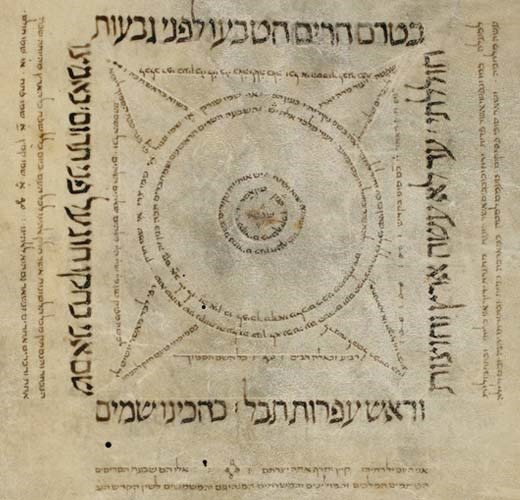 This week’s weekly Torah portion is vayikra (Leviticus 1 – 4). It is the first portion in the third book of the Torah, Leviticus (which in Hebrew is also called vayikra). The portion opens with Y-H-V-H calling out to Moses and instructing him about the ways of worship:
וַיִּקְרָא אֶל מֹשֶׁה וַיְדַבֵּר יְהוָה אֵלָיו מֵאֹהֶל מוֹעֵד לֵאמֹר:He called to Moses; Y-H-V-H spoke to him from the Tent of Meeting. (Lev. 1:1)
On The Weekly Torah Portion of Vayakhel
 What is the origin of the miraculous phenomenon of human creativity? How is it that we are the only creatures on the planet capable of performing such enormous creative (the destructive) acts, of the kind that were once attributed to God alone? This is one of the subjects that this week’s Torah portion, vayakhel (Exodus 35:1 – 38:20), touches upon, in the context of the construction of the mishkan, the tabernacle that has been the subject of the last few weekly portions.
As mentioned earlier, ancient lore considered the tabernacle to be a mirror of the structure of the human psyche as well as the structure of the universe. The art of creating the tabernacle, then, is a mirror of, or a commentary on, the primordial act of creation spoken of in Genesis, on one hand, and the nature of human creativity on the other.
On the Weekly Torah Portion of Terumah
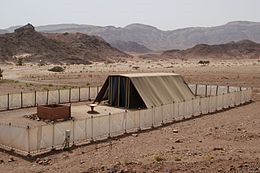 This week’s Torah portion, terumah (Exodus 25:1-27:19), deals with the construction of the tabernacle, the mishkan (משכן), in the desert. The instructions for the construction of the tabernacle are so specific and so minute, that models of the tabernacle can be built with great accuracy (the picture on the left is from such a model built in the south of Israel).
A few verses into the portion, the Torah specifies the effect of building the mishkan:
וְעָשׂוּ לִי מִקְדָּשׁ וְשָׁכַנְתִּי בְּתוֹכָם:And they shall make me a sanctuary, and I will dwell among them. (Exodus 25:8)
The verse seems to suggest, that the tabernacle, the mishkan, will enable God to dwell (lishkon) among the people of Israel. But that is absurd: God confined to a tent? And does that mean that before the construction, God is not able to dwell among them?
On the Weekly Torah Portion of Yitro
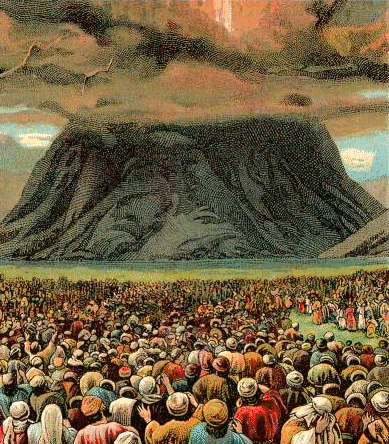 This week’s Torah portion, yitro (Exodus 18:1-20:23), tells the story of the revelation of the Torah to the people of Israel on Mount Sinai. It is said that this was a collective revelation, witnessed by more than half a million people.
Famously, Moses goes up the mountain and returns with the Torah inscribed in stone. Ancient lore has it that he received not only the written Torah (torah shebikhtav), but also the oral Torah (torah she’be’alpe), a tradition of interpretation of the written text which was initially passed on orally. (more…)