
On the Weekly Torah Portion of Va’era
 I am late in posting this d’var Torah on the parashah of va’eira (Exodus 6:2 – 9:35) since I spent the last week on a silent retreat with Rabbi David A. Cooper. Rabbi Cooper and his wife, Shoshana, have been offering this retreat for the past 18 years, and this was the last time they will offer it.
During the retreat, however, the Coopers passed the mantle on to two young successors who will continue with this retreat: Dr. Jay Michaelson (who was, on that occasion, ordained as a rabbi by Rabbi Cooper) and Beth Resnick-Folk, to whom Shoshana passed on her mantle as a Sufi teacher (into which Shoshana herself was inducted by her teacher, Asha).
On Shabbat, we had a Torah reading. Beth was among those who spoke on the theme of that week’s parashah. She was the only one who prepared her notes in written form in advance, and she generously allowed me to reproduce them below.
* * *
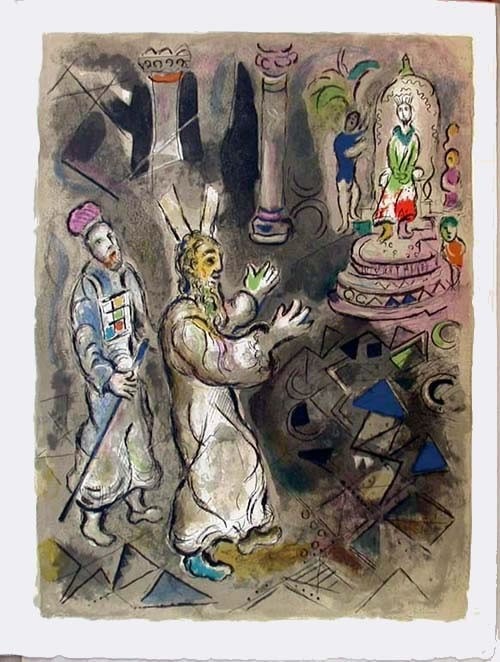
In this parashah (vaei’ra, Exodus 6:2 – 9:35) God tells Moses to go to Pharaoh and to tell him to let the People of Israel go. Moses is already quite daunted by this task when God adds: Pharaoh is not going to listen to you. And I’m going to harden his heart. And then it’s going to get really intense. And I’m going to bring out all of my forces against the Egyptians, and make signs and portents. And by the end of this, even the Egyptians are going to know that I am God, when I free my people from their midst.
As I read this, I thought of the path of spiritual awakening and how, at times, it gets very, very intense, more intense that we had ever anticipated.
And like Moses learning that he has to face Pharaoh, sooner or later we have to face what is most difficult inside of us, our own conditioned patterns of feeling like a separate me. . . who has a problem. If we are serious about being awake to Presence, awake to the fundamental non-separateness of life, we have to face our inner Pharaoh.
And what does it mean to face our inner Pharaoh? It means to simply be with these painful (or maybe just unpleasant) thoughts and emotions, without suppressing them and without being lost in our stories about them. It means allowing these thoughts and emotions to rip though us, being willing to let them burn in the fire of our own simple presence. Now. . . . and now. . . . and now.
And, amazingly, any moment of simply being with what presents itself is a moment of freedom, is a moment of non-separation. It doesn’t just lead to freedom and non-separation later.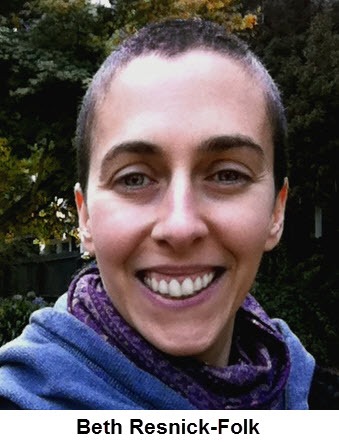
We come to the Promised Land only by way of Egypt. We discover peace only by meeting what isn’t peace within us. . . . Again. . . . And again. . . . And again.
And, over time, we get it more and more fully, that the opportunity to experience non-separation with life is always here. The gates to the Promised Land are always open. . . . Now. . . . And now. . . . And now.
May we be blessed with peace.
May we be blessed with love.
May we be blessed with clarity.
May we be blessed with courage.
Copyright © 2014 Igal Harmelin-Moria
(Copyright does not pertain to illustrations or to text contributed by others)
In trying to understand G-d, we can question the grand description of G-d is in the blessings that describe his three grand deeds:
עשה שמים וארץ – The G-d who created the heavens
כרת הברית עם אברהם, יצחק ויעקב-The G-d of Abraham, Yitzhak and Jacob
הוא שהוציאנו מארץ מצרים-The G-d who took us out of Egypt
While G-d is better described in his thirteen attributes, each of these grand deeds covers an aspect that requires our understanding.
The first – covers revelation, the second – his choice of man’s representation and the third, showing his miracles in creating the Jewish nation.
Our parasha, joined with last week’s Shmot שמות and next week’s Bo בא, cover the story of leaving Egypt in the miraculous way that is depicted in our prayers; where יציאת מצרים, our leaving Egypt, is mentioned in the שמע ישראל Shma prayer, which we recite several times a day and is the central part of the commandment לספר to tell of it during the holiday of Passover and in the commandment of teaching ones child, והגדת לבנך.
Why is leaving Egypt so central a part of the Jewish narrative to mark G-d’s role in our lives, thousands of years after the fact.
The answer is embedded in the central paradox of Jewish observance; where revelation is the more difficult way to connect to an omnipotent distant G-d, the telling of the story of us leaving Egypt, reasserts the central role of the family in the Jewish narrative where the transmission of past miracles, witnessed by the entire nation, is told and retold in every generation, thus connecting us in a more direct and unbroken narrative that helps us feel close to G-d through the truth, transmitted by our parents, their parents and their parents parents, going back thousands of generations all the way to our ancestor’s witnessing our miraculous beginning.
That is why the story of our leaving Egypt and the commandment to retell the story and to teach it to our children plays so central a role in our Jewish life.
We are not only to abide by our holly Torah and it’s commandments but we are commanded to play a central a role in our religious life by continuing and actively perpetuating the live chain that transmits the story of our humble beginning and our becoming a nation through Gd’s miracles.
In doing so, we can connect and understand Judaism as a connection to an omnipotent if distant G-d who is made to be closer to us through our retelling of our personal connection through the miracles he made for us in Egypt as told and retold by our living chain of family witnessing of such.