On the Weekly Torah Portion of Shemot
 We are in the week of the Torah portion of shemot (Exodus 1:1 – 6:1), the first portion in the book of Exodus, which is the second of the five “books of Moses”, The Pentateuch.
Up to now, in the book of Genesis, the first book of the Pentateuch, the history of the Jewish people is told through the story of one family. And indeed, the first few verses in Exodus remind us that Jacob came to Egypt with his extended family of seventy strong. But the Torah almost immediately fast forwards a few hundred years, by which time the people of Israel have become so many that the new Pharaoh is afraid of them and proceeds to enslave them as a precaution.
This is the starting point of a narrative that will unfold in the coming four books: the drama of the People of Israel’s miraculous liberation and exodus from Egypt, and their equally miraculous sojourn in the desert on their way to the promised land, the land of Canaan.
This story is the backbone of Judaism. The history, theology and modes of worship of the Jewish people can all be traced to this story. A Jew’s relationship to this story determines his/her relationship to Judaism; it is, indeed, the source of the collective memory of the Jewish people.
Which is why it is worth repeating what was already mentioned earlier in this blog: that in the Passover hagadah, the formalized recitation of the story of Passover around which the Passover Seder is conducted, we are commanded:
בכל דור ודור חייב אדם לראות את עצמו כאלו הוא יצא ממצרים.In each and every generation one is obligated to regard oneself as if one had come out of mitzrayim.
And that has been understood by rabbis of all ages as an internal journey of the soul from bondage in duality (mitzrayim), the land of sorrow and boundaries, to liberation in unity (kna’an), which this parashah describes as–
אֶרֶץ טוֹבָה וּרְחָבָה… אֶרֶץ זָבַת חָלָב וּדְבָשׁa good and broad land, a land flowing with milk and honey (Exodus 3:8)
It is a journey into the depth of one’s own consciousness, into one’s own Self, for the sake of self discovery and self purification and, ultimately, the liberation of the soul.
* * *
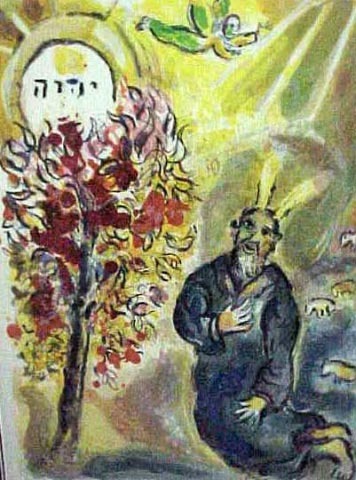
In the story of this parashah, we are told that God attracted Moses’ attention through the burning bush. The Torah tells us:
וּמֹשֶׁה הָיָה רֹעֶה אֶת צֹאן יִתְרוֹ חֹתְנוֹ כֹּהֵן מִדְיָן וַיִּנְהַג אֶת הַצֹּאן אַחַר הַמִּדְבָּר וַיָּבֹא אֶל הַר הָאֱלֹהִים חֹרֵבָה: וַיֵּרָא מַלְאַךְ יְהוָֹה אֵלָיו בְּלַבַּת אֵשׁ מִתּוֹךְ הַסְּנֶה וַיַּרְא וְהִנֵּה הַסְּנֶה בֹּעֵר בָּאֵשׁ וְהַסְּנֶה אֵינֶנּוּ אֻכָּל: וַיֹּאמֶר מֹשֶׁה אָסֻרָה נָּא וְאֶרְאֶה אֶת הַמַּרְאֶה הַגָּדֹל הַזֶּה מַדּוּעַ לֹא יִבְעַר הַסְּנֶה:Moses was keeping the flock of his father-in-law Jethro, the priest of Midian; he led his flock beyond the wilderness, and came to Horeb, the mountain of God. There the angel of Y-H-V-H appeared to him in a flame of fire out of a thornbush; he looked, and the thornbush was blazing, yet it was not consumed. Then Moses said, ‘I must turn aside and look at this great sight, and see why the bush is not burned up.’ (Exodus 3:1-3)
Moses had the presence of mind and the ability to appreciate the miraculous. Perhaps a modern person in the same scene would have exclaimed “wow, that is far out!”, then the iPhone would be pulled out, a few shots would be taken, and soon the Facebook universe would be privy to this fantastic experience. And life would go on.
What kind of awareness do we need today in order to look at the ordinary and see the miraculous? The same awareness that Jacob had when he woke up from his dream and exclaimed—
אָכֵן יֵשׁ יְהוָה בַּמָּקוֹם הַזֶּה וְאָנֹכִי לֹא יָדָעְתִּיSurely Y-H-V-H is in this place—and I did not know it! (Genesis 28:16)
This is a change of awareness that we are all called to: from being caught up in the boundaries of our own mind to experiencing the liberation of our Self, here and now. We are called to leave mitzrayim behind, and start walking towards the Holy Land.
* * *
So how does the Exodus story become a living reality in one’s life right now? How does one bridge the gap between the historical narrative, which is about something “out there”, and one’s life? In the true Hassidic manner, I’d like to illustrate this with a story of one Passover Seder celebration in our family four decades ago.
My non-observant family owned a pastry business—a bakery, a pastry shop, and a café—in the center of Tel Aviv. Passover was a very important and busy time of year for us. As you may know, Jewish dietary rules require that no leavening is used in the preparation of Passover breads and pastry, so kosher Bakeries either shut down for the holiday, or go through a grueling process of cleaning and purifying their establishment in order to get the all-important rabbinical stamp of approval, “kosher lepesach”, fit for Passover. My father chose to take the latter route, because of the brisk business in Passover. But that meant that he had to stay up all night for a few nights in a row in order to prepare his business for the holiday without shutting it down during the day.
To top it off, on the day of the Seder my parents were on their feet from dawn catering to what seemed like an unending stream of customers who came to shop until the very last minute before sunset. My parents then rushed home, exhausted, and my mother somehow still managed to put the Passover Seder together. We would recite the portion of the Haggadah leading to the meal, and the celebration would pretty much be over after that. 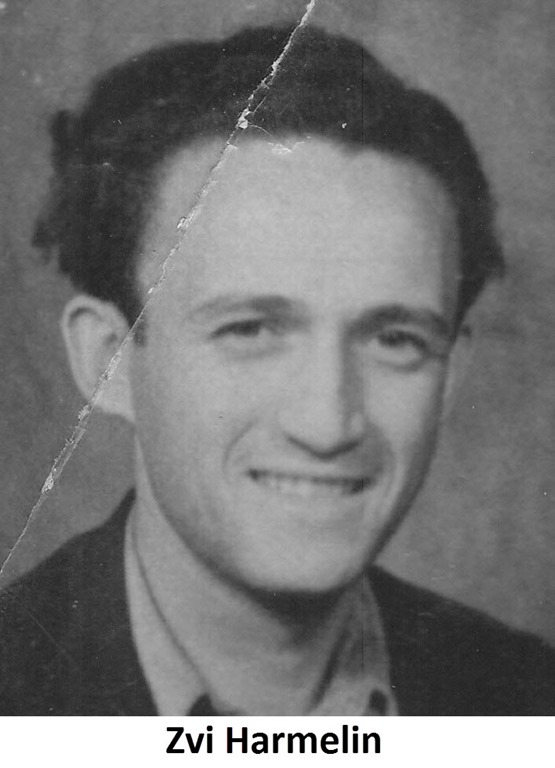
It so happened that in 1973 both my father and I learnt to meditate, and by Passover of 1974, we had almost a year or regular practice under our belt. Meditation had given my father an extra boost of energy and calm, and by the time we sat down to the Seder table, one could already sense that things were going to be different.
Once we started reciting the Haggadah things really got interesting. My dad and I looked at each other with glowing eyes. It was clear to us that the text was not just speaking of some fantastic events in the past that we had a hard time rationalizing. Rather, we had a visceral sense that the text was describing our experience and our own path of self purification and self-discovery in a way that made the story of the Haggadah feel relevant to our lives there and then. The excitement was palpable and infectious. This was the first time that our family we celebrated the Seder wholeheartedly, and told the story of the Exodus as if we were hearing it for the first time.
My father, Zvi Harmelin, passed away 22 years ago this week. This d’var torah—a discourse on the Torah—is in his memory.
———————-
Note: I may not be able to publish a commentary on next week’s Torah portion, since I will be away from a computer until the end of December.
Copyright © 2014 Igal Harmelin-Moria
(Copyright does not pertain to illustrations)
What a beautiful דבר תורה and how beautifully does it connect you to your father – צבי זצ״ל.
I too believe that the story is meant to heighten our own realization about the G-dly and the magical in our lives and to stop us from ending up in our own desert – without knowing towards where we are going. But I’d like to point out to another element embedded in our transition from Genesis בראשית to שמות – to Exodus שמות.
In all fairness, if we wanted to use the Torah to pave our road as Jews, we could start it from exodus שמות, with the exodus from Egypt יציאת מצרים, and the miracles G-d made for us to form us into a nation.
But in naming the members who came down to Egypt, the Torah connects Israel – the nation, to Israel – the family. It makes all he difference in highlighting the meaning of our nationhood in more than having a common goal, land, Torah and purpose. It highlights the reason why we should be each other’s brother’s keeper כל ישראל ערבים זה לזה, by showing us three things: One; that we are all truly brothers. Second, that there are consequences, meaning just as in the covenant that G-d had made with our Patriarchs and Matriarchs – because of their faith, so will we be strengthened by G-d’s covenant with us as part of his covenant with them, if we are worthy, as being their children. And Thirdly, giving us role models and pointing to us our unique place among the nations.
While G-d was willing to destroy the world, so is G-d wanting to save and rebuild the world through his chosen people, starting with Abraham and Sarah.
All of this would have been missing if the story had started with שמות.
With the stories of Genesis בראשית, the Torah becomes much richer.
It’s just too bad that freedom depends on understanding what is slavery.
Every nation, just like every person, we need to know humility before building our temples.
Shabbat Shalom
May your father’s neshama have the greatest Aliya in the heavens and may your eyes stay as bright as they were when you sat together.
Soli Yisrael Foger
Many thanks, Soli!
סיפור מרגש
תודה רבה, איריס.
Very beautiful and touching essay about the exodus and Moses and the story of your family and father. Your father looks like a beautiful man. Thank you. judy
Thanks, Judy!
[…] soul from boundaries in duality to freedom in unity (see commentary on the weekly Torah portion of shemot). Now the text combines this metaphor with another—the one about building a mishkan. Again, it is […]